
Thomas Edison - Wikipedia, the free encyclopedia
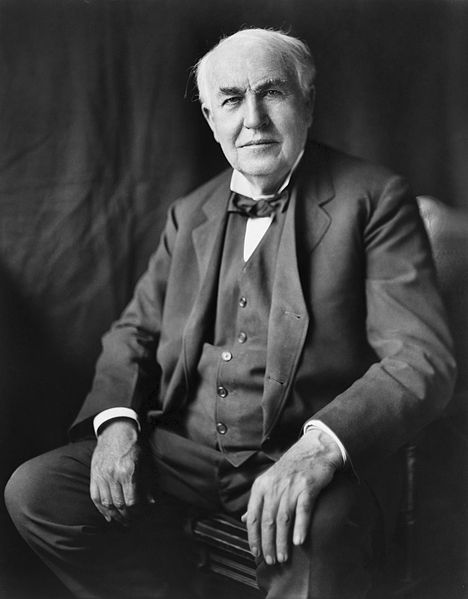
Thomas Alva Edison (February 11, 1847 – October 18, 1931) was an American inventor, scientist, and businessman who developed many devices that greatly influenced life around the world, including the phonograph, the motion picture camera, and a long-lasting, practical electric light bulb. Dubbed "The Wizard of Menlo Park" (now Edison, New Jersey) by a newspaper reporter, he was one of the first inventors to apply the principles of mass production and large teamwork to the process of invention, and therefore is often credited with the creation of the first industrial research laboratory.[1]
Edison is considered one of the most prolific inventors in history, holding 1,093 US patents in his name, as well as many patents in the
Contents[hide] |
Thomas Alva Edison (February 11, 1847 – October 18, 1931) was an American inventor, scientist, and businessman who developed many devices that greatly influenced life around the world, including the phonograph, the motion picture camera, and a long-lasting, practical electric light bulb. Dubbed "The Wizard of Menlo Park" (now Edison, New Jersey) by a newspaper reporter, he was one of the first inventors to apply the principles of mass production and large teamwork to the process of invention, and therefore is often credited with the creation of the first industrial research laboratory.[1]
Edison is considered one of the most prolific inventors in history, holding 1,093 US patents in his name, as well as many patents in the
Contents[hide] |
Thomas Edison | |||||
"Genius is one percent inspiration, ninety-nine percent perspiration." | |||||
Born | Thomas Alva Edison | ||||
Died | October 18, 1931 (aged 84) | ||||
Occupation | Inventor, scientist, businessman | ||||
Religion | |||||
Spouse | Mary Stilwell (m. 1871–1884) | ||||
Children | Marion Estelle Edison (1873–1965) | ||||
Parents | Samuel Ogden Edison, Jr. (1804–1896) | ||||
Relatives | Lewis Miller (father-in-law) | ||||
| |||||


![[Valid RSS]](valid-rss-rogers.png "Validate my RSS feed")


No comments:
Post a Comment